
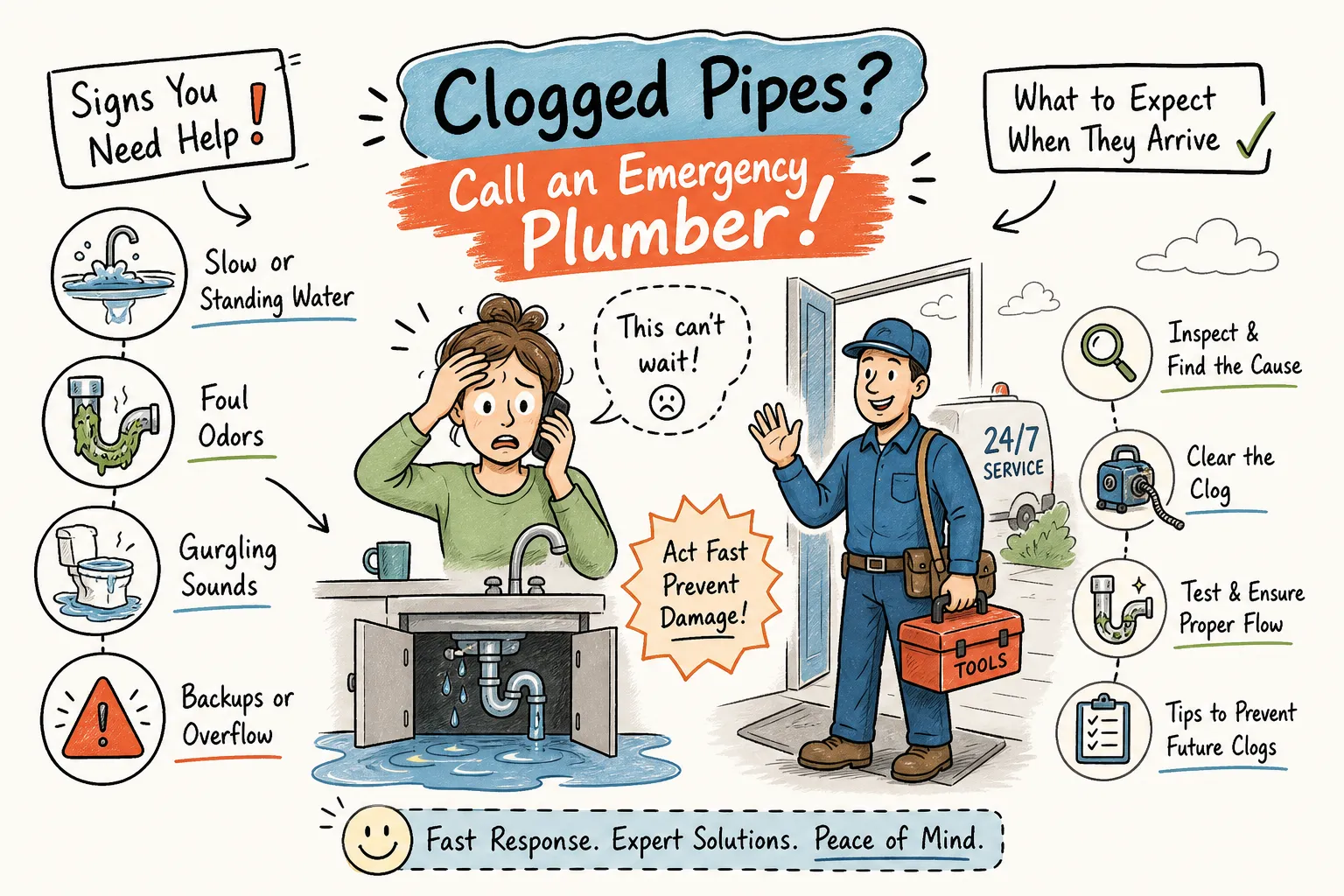
It’s 9 PM. The kitchen sink is full of standing water, and the toilet in the hallway bathroom just started gurgling on its own. If you need a plumber for clogged pipes tonight, the first question is whether you’re dealing with a nuisance or a genuine emergency. Most homeowners do what you’d do: grab the plunger, give it a few tries, and hope for the best. That’s a reasonable first move. But there’s a real difference between a localized clog and a plumbing emergency, and missing that distinction can turn a $300 drain cleaning into a much more expensive main-line repair.
Our crew at ClogMasters has been clearing blocked pipes across Broward County and Miami-Dade for years. We’ve seen what happens when people wait too long and what happens when they call early. This guide covers the most common causes of clogged drains in South Florida, how to triage the problem yourself, the warning signs that mean it’s time to call a licensed plumber for clogged pipes, and exactly what a professional drain cleaning visit looks like from start to finish.
What’s actually causing your pipes to clog
Most clogs don’t happen overnight. They build over weeks or months, starting as a slow drain before graduating to a full blockage. A kitchen drain that takes 30 seconds to empty instead of 5 seconds is already partially blocked. Hair and soap scum accumulate in bathroom lines, food debris and cooking grease coat kitchen pipes, and mineral scale gradually narrows older pipe interiors. By the time the water stops draining entirely, the problem has been building for a while.
South Florida adds a few complicating factors that homeowners in other regions don’t deal with as often. Tree root intrusion is a serious issue here: large tropical trees send roots searching for moisture, and they find it inside the small cracks and joints of older clay or cast-iron sewer lines. Once roots get in, they don’t stop growing. Grease accumulation is another regional driver, particularly in commercial food-service areas across Broward and Miami-Dade, where cooking grease can migrate into shared drain systems. Heavy rainy-season storms also push sand, leaves, and sediment into outdoor and storm drains in ways that back up into residential lines. What looks like a simple slow drain is often something deeper.
When to Call a Plumber for Clogged Pipes: Quick Triage Steps
The first 15 minutes after a drain backs up aren’t about fixing the problem. They’re about not making it worse. Stop using the affected fixture immediately. Check other drains throughout the house to see if the problem is isolated or widespread. Look at the floor drain in the garage, check outdoor cleanout access points for signs of sewage backup, and if sewage is actively overflowing, shut off the main water supply to the house. These steps give you critical information and prevent additional water damage while you figure out what you’re dealing with.
A plunger is the right tool for an isolated, surface-level clog in a single sink or toilet. It is not the right tool for a main sewer line blockage, deep grease buildup, or tree root intrusion. The real diagnostic is simple: if plunging one drain causes another drain or toilet to gurgle, rise, or back up, stop immediately. That reaction isn’t a coincidence. It’s telling you the blockage is in the shared main line, not at the individual drain. Continuing to plunge at that point pushes the problem further and wastes time you don’t have.
Warning signs this is a main-line or sewer emergency
The clearest indicator of a main sewer line blockage is simple: more than one drain is acting up at the same time. A toilet that gurgles when the washing machine drains, a shower that backs up when the kitchen sink runs, a floor drain that starts seeping after a flush. These aren’t separate problems. They’re one problem located deep in the shared sewer line, well beyond where a homeowner or a basic drain tool can reach. This is when you call a licensed emergency plumber, not when you experiment with chemical drain cleaners.
Several other warning signs point to a sewer-level problem. A persistent sewer gas smell inside the home is one of the more serious ones, because it usually means wastewater is backing up into areas it shouldn’t reach. Unusually soggy or bright green patches of grass along the sewer line path in your yard suggest sewage is leaking underground. Sewage backing up into a bathtub or floor drain, especially at the lowest fixture in the house, means the main line is blocked and wastewater is finding the path of least resistance back into the home. None of these situations improve on their own, and none respond to DIY remedies.
A useful rule of thumb: one slow drain is usually a local clog. Multiple drains acting up together is almost always the main sewer line. The distinction determines everything about how the problem gets fixed and what it costs to fix it. Catching a main-line issue early typically means the difference between a straightforward cleaning visit and far more invasive repair work.
What a professional drain cleaning visit actually looks like
A professional drain cleaning visit doesn’t start with guessing. It starts with a sewer camera inspection. A licensed plumber inserts a small waterproof camera through a cleanout or drain access point and feeds it through the line to locate the exact position and cause of the blockage. The footage shows whether the problem is a grease buildup, a tree root intrusion, a cracked or collapsed pipe section, or a simple localized debris clog. Without that visual, a plumber is working blind. With it, there’s a clear diagnosis and a specific plan.
Sewer camera inspection
Camera inspection is now a standard first step among reputable drain cleaning professionals. It eliminates guesswork, lets the technician pinpoint the exact location of the blockage, and surfaces any secondary issues, like a hairline crack, before they become bigger problems. Skipping this step and going straight to clearing tools is one reason homeowners see the same clog return within weeks.
Drain snaking vs. hydro-jetting
Once the camera confirms what’s happening, the plumber chooses the right clearing method. Two tools come up most often in South Florida work:
- Drain snakinguses a flexible cable to break up or retrieve a localized clog. It’s the right call for hair, soap buildup, and isolated food debris that’s within reach of the tool.
- Hydro-jettingsends high-pressure water through the pipe to blast through blockages and scrub the pipe walls clean. It’s the better solution for grease accumulation, recurring backups, tree root debris, and the mineral scale that builds up in South Florida’s older pipe systems.
For most serious or recurring clogs in this region, hydro-jetting delivers a more thorough and longer-lasting result than snaking alone. Many plumbers will snake first to open the line, then jet to clean it properly. After the work is done, a second camera pass confirms the line is clear and identifies any remaining issues worth noting, like a hairline crack that could become a bigger problem in six months.
How to hire the right plumber for clogged pipes
Florida requires a licensed plumbing contractor for any work beyond basic fixture maintenance. Before anyone starts work on your property, ask for the contractor’s license number and confirm it’s active through Florida’s licensing records. The state issues both Certified Plumbing Contractor licenses (valid statewide) and Registered Plumbing Contractor licenses (jurisdiction-specific), and the license on file needs to match the work being done. Also ask for a current certificate of general liability insurance and proof of workers’ compensation coverage or exemption. These aren’t bureaucratic formalities: they protect you financially if something goes wrong during the job.
Pricing transparency is just as important as credentials. A trustworthy drain cleaning company gives you a firm price over the phone before anyone shows up. The price they quote should match the final invoice, assuming the scope of work doesn’t change, get any agreed price documented in writing before work begins. Be cautious of companies that give vague estimates and then add fees once they’re on-site. At ClogMasters, we operate on flat-rate phone-quoted pricing: the price we tell you when you call is the price on the bill. No hidden fees, no surprise charges after the work is done. That’s the standard worth holding every local contractor to before you hire anyone.
Also confirm whether the company can pull permits if the job requires them. Main line repairs and certain sewer work may need a permit under local rules, and only a properly licensed contractor can pull one. This detail matters more than most homeowners realize until something goes wrong.
What same-day emergency service actually looks like
Most reputable local plumbing companies quote arrival windows between 30 minutes and 2 hours for a genuine emergency. In practice, response time depends on crew availability, time of day, and how specific you were when you called. The more detail you give dispatch, the faster they can triage the job and send the right technician with the right equipment. Vague calls get slower responses because the dispatcher can’t prioritize or prepare correctly.
When you call for emergency drain service, have the following ready:
- Which fixtures are affected and whether the problem is isolated or widespread
- Whether sewage is actively backing up or overflowing
- Whether you’ve shut off the main water supply
- Any access limitations at the property, such as a gated entry, parking restrictions, or pets
ClogMasters offers 24/7 emergency service and handles everything from single-drain clogs to full sewer line cleaning. Same-day service is standard, not an add-on. Emergency drain cleaning in Broward County and Miami-Dade typically runs between $250 and $750 for a standard residential job, with more complex main line work or hydro-jetting services priced accordingly. You’ll know the exact number before we arrive. Call now for a quote and to schedule same-day service.
The cost of waiting is higher than the cost of calling
Most clogged pipe situations start small and get worse through delay. A single slow drain is usually manageable and inexpensive to fix. Multiple backed-up fixtures, sewage odors, or pooling in the yard are not manageable and don’t get cheaper the longer you wait. The difference between a routine drain cleaning and a major main-line repair often comes down to how quickly a homeowner recognized the warning signs and picked up the phone.
Knowing when to stop DIYing, what questions to ask before you hire someone, and what professional methods actually involve puts you in control of the situation instead of just reacting to it. If you need a plumber for clogged pipes anywhere in Broward County or Miami-Dade, or you’re simply not sure what you’re dealing with, the fastest next step is a quick phone call. A brief triage conversation often clarifies the likely issue and your best next step. The damage from waiting can take weeks to fix.